
Guests start to scan the room with confused expressions when the sound doesn’t reach them. Whether it’s a performance in a ballroom or a speaker at a conference, audio issues ruin
When you need to rent audio equipment for an event, it’s extremely important to choose a coordinated, high-quality system. Here are the top elements to consider, so you have the right setup.
Consider the Venue’s Features
The venue influences audio planning long before individual equipment enters the conversation. Surface materials, surrounding noise, and available infrastructure all affect how sound behaves once guests arrive. Reviewing those conditions early allows the rental company to build an appropriate system around the space.
Review the Venue’s Acoustic Surfaces
Hard surfaces reflect sound throughout a room, sometimes creating echoes or muddy speech. Glass walls, concrete floors, and high ceilings usually produce more reflection than carpet, curtains, and upholstered seating.
An empty venue might sound especially lively during setup, although guests and furnishings will absorb some of that energy once the event begins. A site visit or detailed venue description allows the rental team to account for those acoustic conditions during system planning and testing.
Confirm Outdoor and Infrastructure Conditions
Outdoor events introduce variables such as wind, traffic, nearby entertainment, and changing weather. The rental company should know whether the event takes place under a tent, beside a roadway, or in an open area where ambient sound could compete with the program.
Power access deserves the same early attention. Confirm outlet locations, circuit restrictions, generator policies, and cable-routing rules with the venue before equipment selections are finalized. Loading access and installation hours should be documented as well, since limited setup windows might influence how the system is delivered and assembled.

Choose Speakers by Coverage
Speaker selection starts with the audience area and the type of audio included in the program. Speech-focused events require consistent vocal clarity, whereas receptions and performances place greater demand on overall output and frequency range. It’s important to have a good idea of which speakers will suit the event.
Use Compact PA Speakers for Small Audiences
Compact PA speakers suit meetings, ceremonies, and presentations where spoken content remains the main priority. Their small footprint works well near stages or seated groups, and their focused output keeps announcements clear without filling an intimate room with excessive volume.
Select Powered Full-Range Speakers for Versatility
Powered full-range speakers handle speech and music through one cabinet, making them suitable across conferences, banquets, and wedding receptions. With amplification constructed into each unit, the system requires few separate components. The result is a straightforward connection between the mixer and speaker output.
Output capacity should match the event’s busiest moment rather than its quietest one. Background music during guest arrival places modest demand on the system, although a keynote presentation or dance segment could require considerably more headroom.
Add Subwoofers for Low Frequencies
Subwoofers reproduce the low frequencies standard full-range speakers cannot deliver with the same depth. They become especially useful during DJ sets, live performances, video presentations, and entrances built around music with a prominent bass line.
Remember that bass won’t automatically produce high-quality sounds. Properly balanced subwoofers strengthen the music without overpowering speech or creating heavy pockets of sound near certain seating areas.
Select Microphones by Use
Microphone style should reflect how each person will speak or perform throughout the program. A handheld unit suits remarks passed among several guests, whereas a lavalier leaves a presenter’s hands free during a demonstration.
Wireless systems demand extra planning because frequencies and battery management affect reliability. The provider should scan the venue environment and assign channels before the audience arrives. Confirm how many people will speak at once and whether anyone will move through the audience, then request spare batteries or a backup microphone in the system plan.
Verify Mixer Capacity
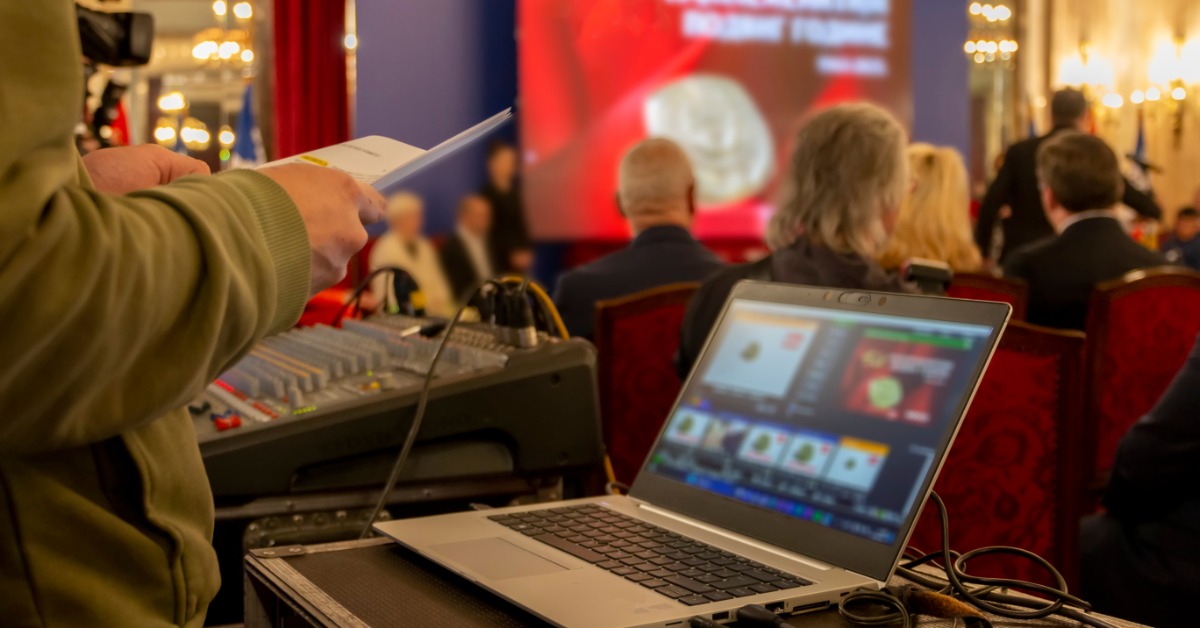
The mixer serves as the control center for the entire audio system, so selecting the right capacity starts with understanding how many sound sources will run at the same time. Each microphone, playback device, and instrument requires its own input, and those inputs determine the minimum channel count needed for smooth operation during the event.
Begin by listing every audio source planned for the program, including presenters, wireless microphones, video playback, and any live performance elements. Once that list is complete, match it against a mixer with enough dedicated channels to handle each source without sharing or swapping connections mid-event. Leaving a small number of open channels provides flexibility for unexpected additions, like a last-minute speaker.
Playback devices require equal attention during selection. Laptops, tablets, and phones commonly use different output formats, so compatibility should be confirmed early in the planning process. After sharing the full list of devices with the rental provider, you’ll have the appropriate adapters and cables ready to use.
Ask About Technical Support
Some events only require a tested system and a short operating walkthrough. Programs with several presenters or live performances benefit from an audio technician who monitors levels and responds when the schedule changes.
Discuss the event’s complexity before choosing a support level suited to the program schedule. A rehearsal window lets the technician set microphone gain and learn the program order before doors open. The company should explain who handles troubleshooting and how quickly assistance arrives, especially when the rental uses wireless microphones or a digital mixer with settings unfamiliar to the event team.
Review the Service Schedule
Even the right audio package creates problems when delivery arrives too late or the setup time has a narrow window. Before booking, review the full service timeline so the rental company and venue operate from the same schedule.
Ask when the crew plans to arrive and compare that time with the venue’s access rules. Loading docks, freight elevators, parking restrictions, and room turnover schedules could delay equipment transport.
Audio equipment requires more than a quick drop-off before guests enter the room. The crew must place each component, connect the system, secure cables, and test every audio source included in the program.
Build enough time into the schedule for a complete sound check after installation. Presenters, performers, or event organizers should be available during this window whenever possible, since testing with the actual program sources provides a more accurate picture of volume and clarity.
Source the Full System From One Reliable Company
Audio components work as one connected system. If you rent pieces from several suppliers, it becomes difficult to coordinate schedules. Plus, there’s a chance that you’ll return equipment to the wrong company.
Renting audio equipment from one provider for speakers, microphones, mixers, stands, and cables keeps the equipment plan organized under a single point of contact. Chicago Audio Rentals is an AV company in Chicago that supplies professional equipment and delivery, setup, and production services. Reach out to our team to discuss your event, and we’ll help you finalize the equipment details.