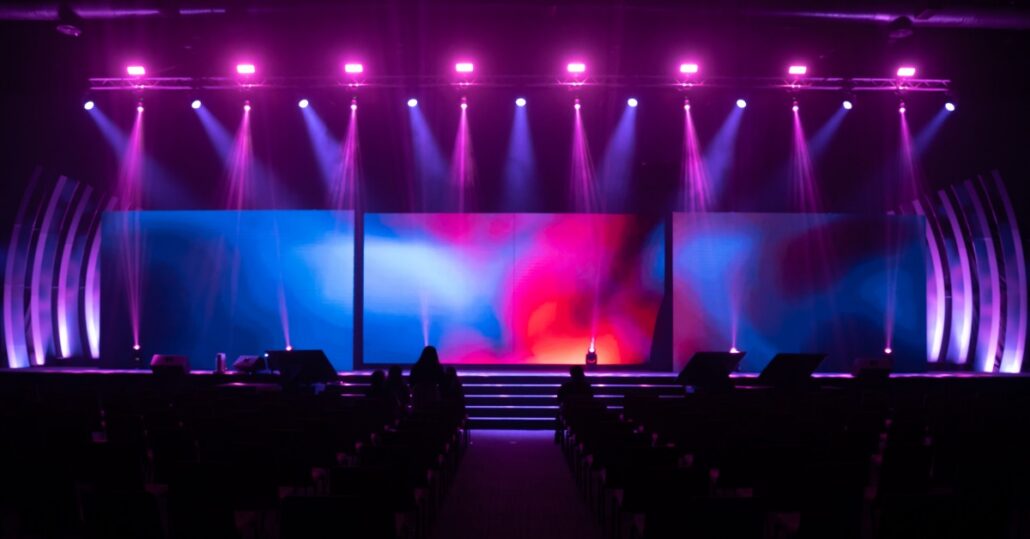
LED walls are impressively eye-catching. Whether you’re displaying a slideshow for a product reveal or a romantic video at a wedding, these customizable devices are incredible additions to events. But before you can present media on a large scale, there are several important questions to ask prior to renting an LED wall system.
What Size LED Wall Do You Need?
LED walls consist of connected cabinets, so configurations depend on modular increments. Begin with the dimensions of the stage and the distance between the display and the audience. A screen measuring approximately 10 feet wide by 6 feet tall could suit a modest indoor presentation, whereas a 16-by-9-foot wall provides a greater display area for a ballroom or large conference stage.
Ask for the finished width and height, including any supporting structure, and compare those measurements with the venue’s usable space. The proposed size must accommodate both readable content and any presenters sharing the stage.
How Bright Does the Display Need to Be?
Manufacturers express LED wall brightness in nits, a measurement of light output per unit of screen area. Indoor event walls commonly operate within a range of approximately 800–1,500 nits, although a dim conference room could call for a more subdued setting. Excessive brightness during a seated presentation is likely to result in visual discomfort, especially when the surrounding lights are low.
Outdoor installations face substantial daylight competition. Direct-sunlight applications frequently call for displays rated around 5,000 nits or above, depending on positioning and exposure. Making sure that the LED wall has adjustable brightness will make sure that the brightness level is perfect for the environment.

Where Can the LED Wall Be Installed?
Floor space isn’t the sole consideration when selecting an installation location. The venue must accommodate the wall’s overall footprint, including any ground-support structure or mounting equipment. An approximately 16-foot-wide display, for instance, could occupy additional space beyond its illuminated surface once technicians install the supporting components.
Ask whether the configuration uses ground support or overhead rigging and what venue approvals that arrangement involves. Ceiling load limits, nearby entrances, and access for equipment delivery could affect the plan. The provider should establish the wall’s structural requirements with venue personnel to guarantee that the structure fits in seamlessly.
What Electrical Service Will the Wall Require?
Vast LED displays draw considerable power, and their consumption changes with the panel model, brightness level, and images shown. Some indoor LED systems have average operating draws around 150 to 250 watts per square meter, with peak demands substantially above those figures. An 18-square-meter wall at 200 watts per square meter would average approximately 3,600 watts under those assumed conditions.
That illustration isn’t a circuit specification. Ask for the proposed equipment’s maximum power draw, electrical connections, and distribution requirements, then share those details with the venue’s electrician. A room that already powers stage lighting and audio equipment might lack the available circuits necessary for the wall.
What Resolution Will the Screen Display?
Image quality directly influences how audiences experience visual content. Blurry graphics, pixelated images, and difficult-to-read text diminish the on-screen message. When discussing resolution with a rental provider, it’s important to understand how pixel pitch affects the display’s image quality.
Pixel pitch measures the distance between adjacent pixels in millimeters, with smaller measurements indicating a high concentration of pixels. Indoor LED walls commonly feature pixel pitches ranging from 1.9 to 3.9 mm. For example, a P2.5 display generally produces sharper images at close viewing distances than a P3.9 display of the same size because it contains a greater number of pixels.
However, the ideal pixel pitch depends on how far attendees will sit or stand from the screen. As a general guideline, a P2.5 display suits viewing distances of approximately 8 feet or greater, whereas a P3.9 display generally works at distances of around 13 feet or beyond. Ask the rental provider about the assembled screen’s resolution and recommended viewing distance to ensure the visuals appear crisp from the audience’s seating area.

Is It Possible To Display Live Camera Footage?
Showing a presenter or product demonstration on the wall involves connecting a camera feed to the display’s video-processing system. A conference with several speakers might use a video switcher to alternate between presentation slides and live camera shots. That arrangement requires compatible connections and an operator.
Ask which input types the production equipment accepts and whether the quoted package includes video switching. If the event involves live performers, discuss latency too: processing delays could cause visible movement on the screen to lag behind activity onstage.
Who Will Install and Test the System?
The wall’s quoted dimensions don’t explain how much time the production crew will spend assembling it. Technicians must position cabinets, connect power and signal cables, configure the video processor, and examine the completed image. Larger installations or complicated access arrangements could require substantial setup time before the event’s scheduled rehearsal.
Ask when the crew will arrive and whether the agreement includes a complete signal test using the actual presentation files. Testing should cover image alignment, playback, and transitions between sources, especially when the program includes video clips or live feeds. Confirm that technicians will finish these checks before guests enter the venue.
What Costs Does the Quote Cover?
A low equipment price tells little about the final rental expense until the provider identifies the services included. Delivery, support structures, setup labor, video processing, and technical staffing could appear as separate charges. Request an itemized proposal so that two quotes covering similar wall dimensions don’t conceal substantially different service arrangements.
Finalize the Rental Details
Answering these questions about LED wall rentals is necessary to give your event an amazing display. Sharing the room dimensions, audience layout, and content formats gives a rental team the information necessary to recommend an appropriate configuration.
For video wall rentals in Chicago that include setup and testing services, reach out to Chicago Audio Rentals. We provide audio-visual equipment for corporate events, trade shows, live productions, and more. Call our team or fill out an online form to discuss available screen configurations, installation arrangements, and the equipment required for the planned presentation.