
The first thing people notice at a trade show usually isn’t a product. It’s the look of the space. Some booths feel open and easy to approach, while others seem cluttered and disorganized. Nailing that first impression matters because attendees often move quickly through a crowded floor and decide within seconds which booths deserve a closer look.
A strong booth doesn’t need to be overbuilt to feel professional in order to see results, though. All it needs is some clear boundaries, a comfortable layout, and enough visual structure to help people understand where to look and how to step in. That’s why the right pipe and drape setup can make such a big difference. If you’re preparing your trade show booth for a Chicago event, you need to learn more about how this simple structure can help your business stand out.
Start With a Clean Back Wall
The most dependable setup is a full drape wall across the back of the booth. It gives your display a finished look and creates a visual boundary between your company and the one behind you. That clean edge matters because trade show spaces can get visually crowded very quickly.
A back wall works best for inline booths, where your space sits between neighboring exhibitors. The drape helps frame a banner or product display without forcing you to build a heavier custom structure. It’s simple, but it gives the booth a polished foundation.
Once the back wall is in place, the rest of the booth can build forward from it. You can place a table near the aisle, leave room for conversation, or keep the center open so guests don’t feel boxed in.
Add Side Returns for More Definition
Side returns are short drape sections that extend from the back wall toward the aisle. They don’t have to run the full depth of the booth to be useful. Even a small return can make a booth feel more defined without closing it off.
This is helpful when you want attendees to understand where your space begins. On a packed Chicago show floor, booths can blur together when there’s no clear separation. A little structure can also hide supplies that don’t belong in the main view.
Of course, too much side coverage can make a booth look private in the wrong way. Shorter returns tend to work better because they create shape while still inviting people to walk up and say hello.
Use an Open Corner Layout for Better Foot Traffic
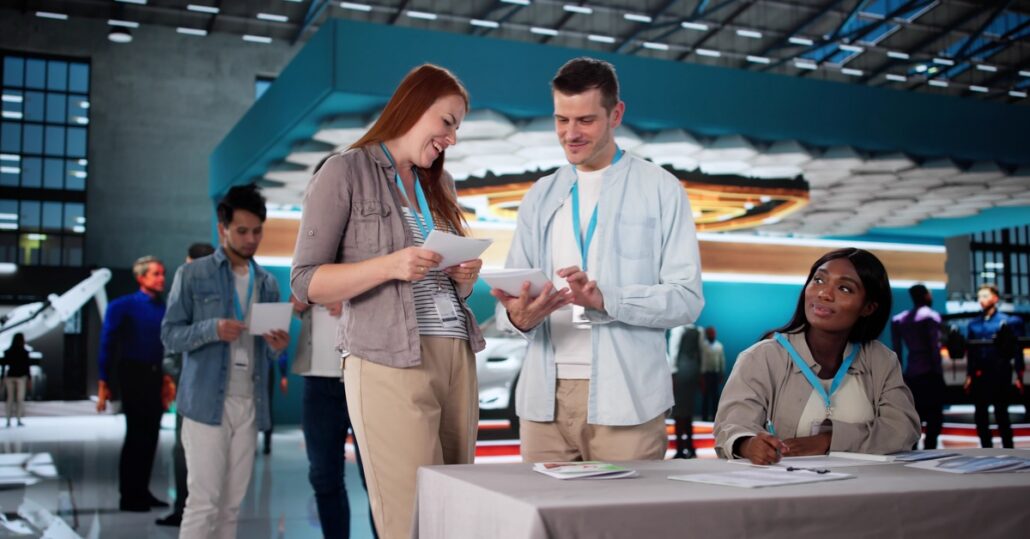
Corner booths have a major advantage because they face traffic from two directions. A heavy drape setup can waste that advantage, so the best approach usually leaves both aisle sides open. The drape should support the booth’s presence rather than block the natural flow.
A strong corner layout often uses a back wall and one partial side section. This creates a defined display area while keeping the corner visible. Staff can greet people from either aisle, and attendees can step in without feeling like they’re entering a narrow room.
Create a Private Meeting Area Without Building Walls
Not every trade show conversation belongs in the aisle. Some exhibitors need space for pricing talks or consultations. Pipe and drape can create a softer meeting area that feels separate without making the booth look closed.
A meeting setup can use a taller drape behind a small table with one side partially screened. The opening should remain wide enough that the space feels accessible. You want a little privacy, not a hidden room that makes people hesitate.
This can be useful at a variety of larger Chicago events where background noise and foot traffic make longer conversations harder. Drape won’t make the booth silent, but it can reduce visual distractions and give the meeting space a calmer feel.
Frame a Demo or Presentation Zone
If your booth includes a screen-based demo or scheduled presentation, pipe and drape can help focus attention here as well. A darker or more neutral backdrop can make a monitor easier to see. It can also keep the audience’s eyes on the presenter rather than on the booth across the aisle.
A presentation zone should leave enough room for people to stop without blocking the full walkway. The drape can sit behind the display, while the front stays open for viewers. This layout gives the booth a small stage effect without making it feel formal.
For exhibitors using audio visual rentals alongside pipe and drape, coordination matters. Screens and lighting need space to function well, so the drape plan should support the equipment instead of crowding it.
Choose Height Based on the Booth’s Purpose
Something else to note here is that drape height will affect how a booth feels. Taller drapes create a stronger backdrop and can help a brand stand out in a busy hall, while lower ones can feel more casual, especially when the booth is designed for quick conversations.
The right choice depends on the booth’s job. A space built around meetings may need more separation. A booth built around walk-up traffic may need a lighter setup that keeps sightlines open.
Chicago events often bring a mix of corporate exhibitors and local teams, so there’s no single setup that fits everyone. The better question is what the drape needs to do. Once that purpose is clear, height becomes an easier decision.
Plan the Setup Around the Venue Schedule

Chicago trade shows can involve tight load-in windows, crowded docks, and strict setup timelines. A pipe and drape setup for your booth should be practical enough to install efficiently in these types of scenarios. The best design in the world won’t be worth the hassle if it slows down the rest of the booth build.
Before choosing a layout, think through how the booth will be assembled. Staff need room to move, equipment needs a clear path, and the finished space should be easy to adjust if the floor plan changes. That’s one reason many exhibitors look for pipe and drape rentals in Chicago instead of trying to bring their own setup to piece together.
When the show ends, the booth needs to come down cleanly so the team can move out without added stress. A setup that’s easy to remove can make teardown feel far less rushed.
Match the Setup to the Way People Will Use the Booth
The best pipe and drape setup isn’t always the biggest one. It’s the one that matches how people will move through the space. A booth designed for quick lead capture needs openness near the aisle. A booth built for deeper conversations needs enough separation to make guests comfortable.
Think about where staff will stand and where attendees will pause. Consider what people should see first. Then use pipe and drape to guide that experience rather than treating it like a background decoration.
When the setup supports the booth’s purpose, the whole space feels easier to understand. Visitors know where to look, staff know where to work, and the booth has a stronger presence on a crowded Chicago trade show floor.